
-
Gdansk City TourSightseeing in Gdańsk by Melex
What is worth visiting in Gdańsk?
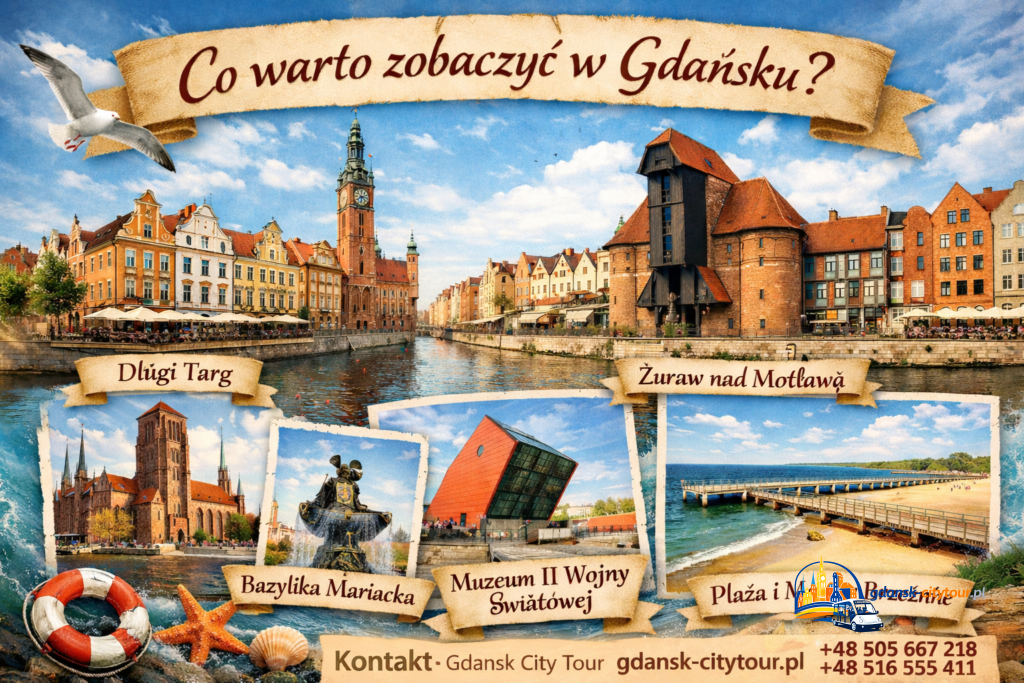
What's worth seeing in Gdańsk? A complete guide to the city's attractions.
Gdańsk is one of the most beautiful cities in Poland and one of the most important historical centers on the Baltic Sea. The city captivates with its unique architecture, rich history, and the extraordinary atmosphere of a port trading center that has been a meeting place for cultures from all over Europe for centuries.
If you are planning a trip and wondering what is worth visiting in Gdańsk, this guide will help you discover the city's top tourist attractions. From medieval streets and monuments to modern museums and seaside promenades, Gdańsk offers a huge number of places worth seeing.
The city is also an ideal place for both a short weekend trip, as well as a longer stay at the seaside.
Why is it worth visiting Gdańsk?
Gdańsk's history stretches back over a thousand years. The city has played a significant role in the history of Poland and Europe, serving as one of the most important trading ports in the Baltic Sea region.
For centuries, Gdańsk was part of the Hanseatic League, a powerful merchant organization that controlled trade in northern Europe. The city's wealth is still evident today in the architecture of its townhouses, churches, and historic buildings.
Gdańsk attracts tourists thanks to:
- beautiful old town
- historic architecture
- a unique story
- modern museums
- coastal climate
Walking around the city, you can discover places connected with the most important events of the 20th century – it was here that World War II began, and several decades later, the Solidarity movement was born.
The most important tourist attractions in Gdańsk
Długi Targ and the Neptune Fountain
One of the most characteristic places in Gdańsk is Long Market, which is a representative part of the historic city center.
The square is surrounded by beautiful merchant houses, each with its rich decorations and colorful facades. In the past, the city's most important events, fairs, and celebrations were held here.
The central point of the Long Market is Długi Targ and the Neptune Fountain, the symbol of Gdańsk. Created in the 17th century, it depicts the Roman god of the sea holding a trident.
According to legend, it was Neptune who contributed to the creation of the famous Gdańsk liqueur Goldwasser by striking a barrel of alcohol with his trident and shattering the gold flakes in the drink.
Main Town Hall
The Main Town Hall is one of the most important monuments in Gdańsk and a true pearl of Renaissance architecture.
The building was built in the 14th century, and its tower was the highest point in the city for many centuries. Today, the town hall houses Gdańsk Museum, which presents the history of the city from the Middle Ages to modern times.
It makes the biggest impression Red Room, which served as the venue for city council meetings. Its rich decorations, paintings, and gilding testify to the power of old Gdańsk.
St. Mary's Basilica
St. Mary's Basilica is the largest brick church in the world and one of the most important religious monuments in Poland.
Construction of the church took over 150 years, completing in the 15th century. The church's interior is impressive with its vast space and numerous works of art.
The most interesting elements of the basilica are:
- astronomical clock from the 15th century
- Gothic altars
- sacred sculptures and paintings
- impressive vaults
It is also worth climbing the church tower, from where there is a panoramic view of the entire city.
The Gdańsk Crane
The Crane is one of the most characteristic symbols of Gdańsk and at the same time one of the oldest port cranes in Europe.
It was built in the 15th century and was used for:
- transshipment of goods
- lifting heavy ship parts
- mast assembly
The crane mechanism was powered by people walking inside huge wooden wheels.
Today, the building is part of the National Maritime Museum and is one of the city's most important tourist attractions.
Mariacka Street
Mariacka Street is one of the most atmospheric places in Gdańsk.
It is known primarily for its numerous amber galleries, because Gdańsk has been called the amber city for centuries. the world capital of amber.
Walking along this street you can see:
- beautiful stone porches
- historic tenement houses
- art galleries
- jewelry workshops
In the evening, the street takes on a unique atmosphere thanks to subtle lighting and an intimate atmosphere.
The most interesting museums in Gdańsk
Museum of the Second World War
It is one of the most modern historical museums in Europe.
The exhibition presents the history of World War II in a broad context – from the events preceding the conflict to its consequences.
Visitors can see:
- authentic exhibits from the war period
- reconstructions of streets and buildings
- archival recordings
- multimedia presentations
The museum makes a huge impression and is one of the most important points on the tourist map of Gdańsk.
European Solidarity Centre
The European Solidarity Centre is a modern museum and educational center dedicated to the history of the Solidarity movement.
It is located near the historic Gdańsk Shipyard, where workers' strikes began in 1980.
In the museum you can see:
- historical documents
- recordings of protests
- memorabilia related to Lech Wałęsa
- reconstructions of events from the 1980s
This place allows us to better understand Poland's path to freedom.
National Maritime Museum
Gdańsk has been linked to the sea and maritime trade for centuries. That's why one of the city's most interesting museums is the National Maritime Museum.
The exhibition includes, among others:
- history of navigation
- ship models
- old sea maps
- navigation tools
The museum consists of several branches located in different parts of the city.
Gdańsk by the water – Motława and Granary Island
A walk along the Motława River is one of the most pleasant ways to explore Gdańsk.
The waterfront offers beautiful views of:
- historic tenement houses
- tourist ships
- historic granaries
Granary Island was once a storage site for goods arriving at the port. Today, it houses numerous restaurants, hotels, and modern buildings.
It's the perfect place for a sunset walk.
Westerplatte – the place where World War II broke out
Westerplatte is a peninsula located at the entrance to the port of Gdańsk.
On September 1, 1939, it was here that World War II began. For seven days, Polish soldiers defended the military depot against attack by German troops.
At Westerplatte you can see:
- Monument to the Defenders of the Coast
- ruins of barracks
- battlefields of Polish soldiers
- historical paths
This is a place of great historical significance.
Gdańsk outside the city center – places worth seeing
Oliwa and Oliwa Park
Oliwa Park is one of the most beautiful parks in Poland. It features gardens, ponds, and numerous walking paths.
Also nearby is Oliwa Cathedral, famous for its monumental organs and organ music concerts.
Beaches in Gdańsk
Gdańsk also offers beautiful beaches on the Baltic Sea.
The most popular of them are:
- beach in Brzeźno
- Jelitkowo
- Stogi
These are perfect places to relax after exploring the city.
Polsat Plus Arena Gdańsk
The modern stadium was built for the 2012 European Football Championship.
The building is inspired by amber and is one of the most distinctive stadiums in Europe.
Visiting Gdańsk with a guide – why is it worth it?
Although you can explore Gdańsk on your own, the best way to get to know the city is by guided tour.
The guide will show you places that are often not described in standard tourist guides and tell fascinating stories related to the city.
During the tour you can learn about:
- Gdańsk legends
- the history of Hanseatic merchants
- architectural curiosities
- secrets of old tenement houses
This makes sightseeing much more interesting.
When is the best time to visit Gdańsk?
Gdańsk is attractive at any time of the year.
Spring and autumn are ideal for those who want to explore the city in a more relaxed atmosphere.
In summer, Gdańsk is vibrant with life and offers numerous cultural events, festivals and concerts.
In winter, you can visit one of the most beautiful Christmas markets in Poland.
What is worth visiting in Gdańsk – summary
Gdańsk is a city full of extraordinary places worth seeing at least once in your lifetime. From historic streets to modern museums, there's something for everyone.
The city's most important attractions include:
- Long Market
- Długi Targ and the Neptune Fountain
- St. Mary's Basilica
- The Gdańsk Crane
- Museum of the Second World War
- European Solidarity Centre
Visiting Gdańsk is a fascinating journey through the history, culture and tradition of one of the most beautiful cities in Poland.
Book a trip
FAQ – Frequently asked questions about visiting Gdańsk
If you only have one day to explore Gdańsk, it's worth focusing on the main attractions in the historic city center. The best route involves a walk along the Royal Route, from the Golden Gate through Długa Street to Długi Targ.
Along the way, you'll see key monuments such as the Neptune Fountain, the Main Town Hall, and the Artus Court. Then, visit St. Mary's Basilica and stroll along the atmospheric Mariacka Street. Finally, I recommend a stroll along the Motława River and seeing the famous Gdańsk Crane.
The most important tourist attractions of Gdańsk include the monuments of the historic city center and modern museums.
The most frequently visited places are:
- Długi Targ and the Neptune Fountain
- St. Mary's Basilica
- The Gdańsk Crane
- Main Town Hall
- Museum of the Second World War
- European Solidarity Centre
- Westerplatte
These places allow you to learn about both the medieval history of the city and its importance in the modern history of Europe.
The most important attractions of Gdańsk can be seen in one day, but to leisurely explore the city and visit museums, it is worth planning at least two or three days.
In a single day, you can see the Old Town, St. Mary's Basilica, Długi Targ, and the Motława River embankment. Additional time will allow you to visit the Museum of the Second World War, the European Solidarity Centre, and Westerplatte.